Track your book
Write the call where you see the stock
You own 300 shares; writing a call against them should start where you can see them. Every portfolio holding with at least 100 uncovered shares carries a Sell covered call action — and the tracker keeps the call attached to the shares for the life of the position.
Selling the call
- Open the position row’s menu in the portfolio (or the covered-call flow on the wheel page) and choose Sell covered call.
- The dialog states the coverage math plainly — “300 shares · 100 already covered · up to 2 contracts” — and caps contracts at your uncovered shares ÷ 100. Shares already backing an open call cannot back another.
- Pick a strike. Suggestions sit above your adjusted basis with the if-called return alongside; a strike below basis is a locked-in loss and gets flagged before you can confirm it.
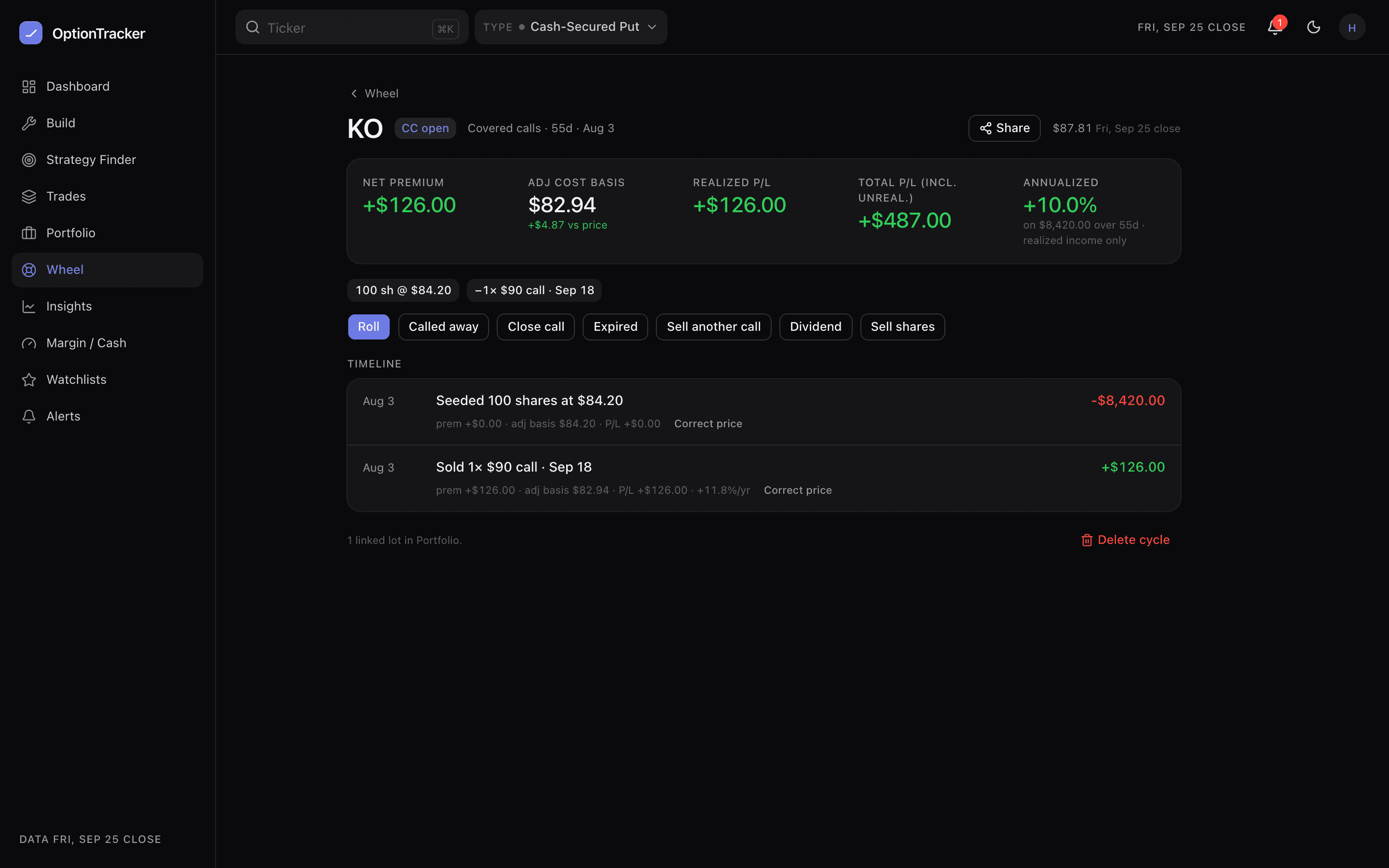
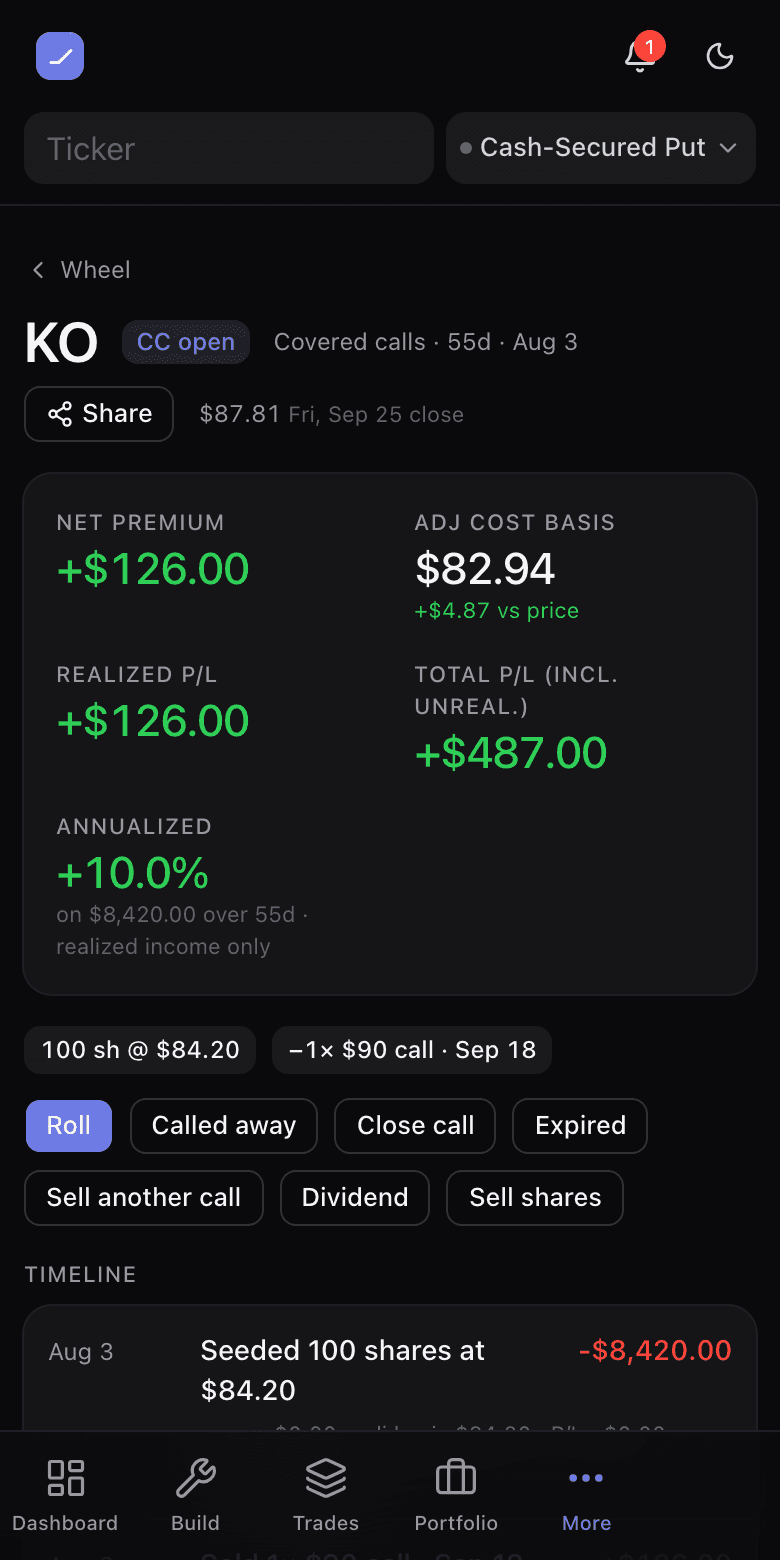
- Confirm. The portfolio’s covered-share count updates immediately and the cycle appears on the wheel page — the two screens never disagree.
Which cycle the call joins
- Shares from an assignment: the new call joins the wheel cycle that produced them — it is the same campaign continuing, and the premium keeps adjusting that basis.
- Bought or imported lots: a covered-call cycle is created, seeded from those lots at their real cost basis.
- Never a duplicate: shares already inside a cycle can never spawn a second one.
Through expiry, buy-back or call-away
Log the outcome on the cycle: expired worthless ($0.00 is a real price), bought back, rolled — the roll preview prices the close and the new sale from the live chain — or called away, which realizes the shares against their adjusted basis. Between calls the cycle stays visible as “holding shares”, never silently closed.
Rolling the call, ranked
When the stock runs at your strike, the question is which roll — and Roll on the row prices one candidate. Open the position in Explore instead and the rolls come back ranked: the strike you hold and two either side, at up to four expiries past the one you are in, each with the credit at today’s marks, the credit per day of extension (the days it adds, not days to the new expiry), what it does to the collateral your broker holds, and the new breakeven. A roll that only pays because it moves closer to the money is flagged and ranked last, never first.
Pick one and it becomes a what-if beside the position — nothing is written yet. Apply it and the roll is recorded on the cycle as a close and an open, so cumulative premium, adjusted basis and the open call all stay right. Ivy will price and rank the same rolls if you ask her, and on a cycle she can record the close-and-open behind her own Confirm card; rewriting a saved position’s legs stays with Apply.
Choosing between expiries for the next call? The strike-first table prices your strike across every expiry the chain lists, side by side — weeklies near, monthlies and LEAPs as you scroll.